
Cart
0
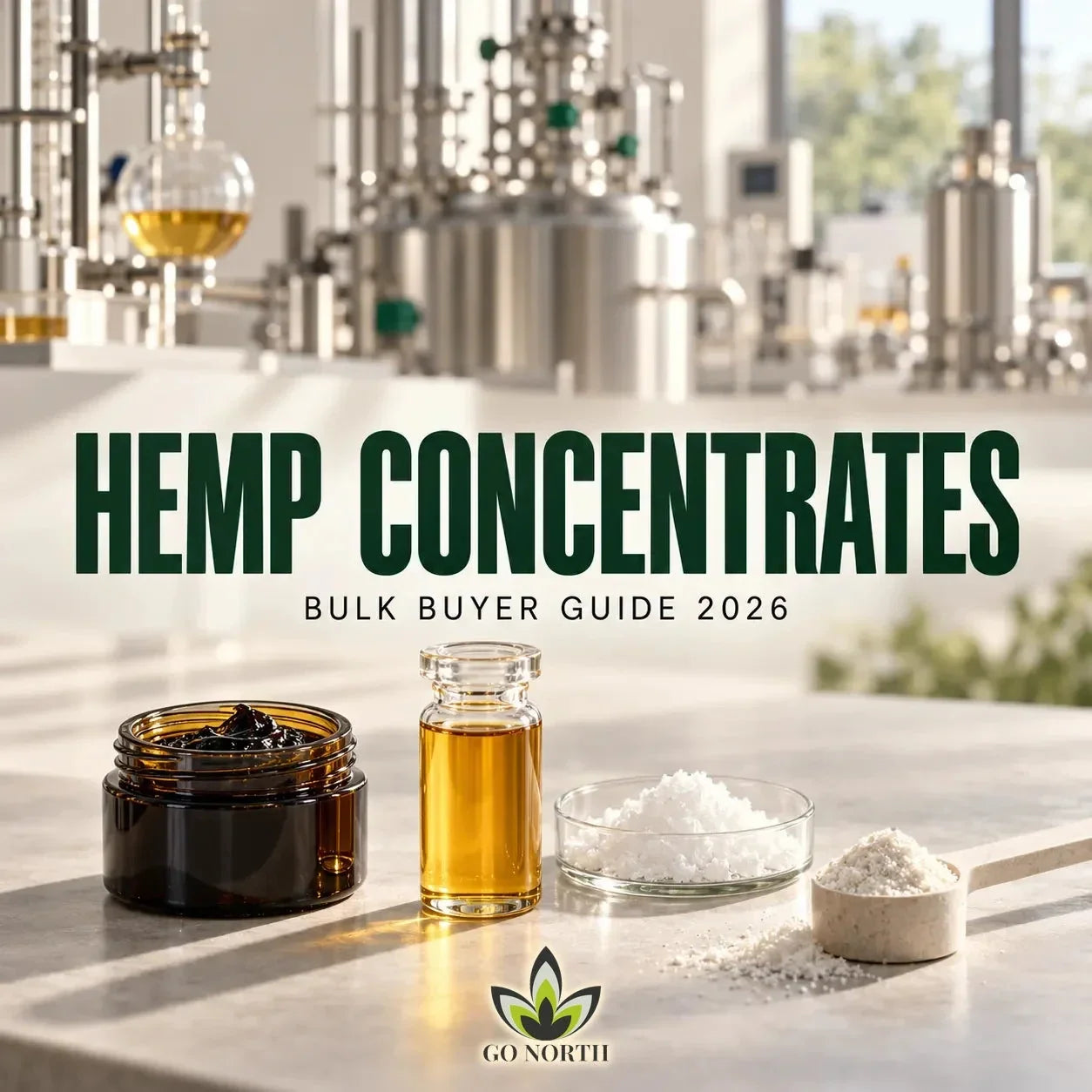

Hemp Concentrates Explained: Types, Testing, and Bulk Sourcing for B2B Buyers
Interest in hemp concentrates has grown as formulators, product developers, and brands evaluate concentrated cannabinoid ingredients for supplements, beverages, and topicals. But the term covers an enormous range of products, from crude extracts to highly purified cannabinoid isolates, and the differences between them determine potency, stability, compliance, and finished product quality.
This guide breaks down the concentrate categories that matter to commercial buyers, explains how each is made and refined, shows what proper testing looks like, and maps the buying process for bulk volumes. Whether you are launching a functional beverage line or scaling a supplement brand, this is the orientation you need before you request a quote.
What Is a Hemp Concentrate?
A hemp concentrate is any product in which cannabinoid content has been separated from the plant matrix and concentrated into a more potent form. Raw hemp biomass might contain 10-20% total cannabinoids by dry weight. A well-refined concentrate can exceed 90%.

For commercial buyers, concentrates split into a clear hierarchy based on refinement level:
Crude extract. The first pass of extraction, typically ethanol or CO2 based, pulls cannabinoids, terpenes, chlorophyll, fats, and waxes together. Crude is cheap, but it requires further processing before it belongs in a finished product. Buyers who purchase crude usually have their own refinement capability.
Distillate. A refined oil in which the target cannabinoid has been concentrated, commonly through winterization and distillation steps, though the actual production pathway varies by cannabinoid, supplier, and lot. Distillates are the workhorse of commercial formulation: potent, blendable, and available for a range of commercially supplied cannabinoids from CBD to CBN to THCV, subject to current inventory. Distillate potency varies by cannabinoid, process, and lot; use the batch COA for the actual assay, and treat potency, form, and sensory profile as lot-specific facts rather than universal specifications.
Isolate. A single crystallized cannabinoid, commonly assayed at 99%+ purity, though exact potency and physical form are lot-specific. Isolates are commonly selected when a formulation requires a high-purity cannabinoid ingredient with relatively low flavor contribution, such as powder blends or capsules. Actual finished-product dosing accuracy depends on the batch potency, weighing, processing, blending, and content-uniformity testing. A crystalline isolate is not water-soluble on its own: a formulated water-dispersible system is a different ingredient category.
Water soluble powder. A formulated ingredient in which an isolate or distillate has been emulsified or otherwise processed into a powder or liquid designed to disperse in water. Dispersion, potency uniformity, and stability vary by system and must be validated in the finished beverage or powder. This is the concentrate format associated with the fast-acting beverage and functional drink market category, where performance claims require finished-product evidence.
There are also whole-plant and full-spectrum extracts that deliberately retain minor cannabinoids and terpenes. These serve the entourage-effect market but trade potency for profile breadth.
Common Concentrate Names: Dabs, Crumble, Shatter, Hash, Live Resin, and Rosin
In the consumer market, concentrates are often referred to by texture and production names rather than refinement grades. If you source ingredients for finished products, expect to hear dabs, crumble, shatter, hash, live resin, and rosin in category and labeling conversations. Consumer-facing concentrate names describe extraction methods, processing histories, textures, or intended use. They do not map one-to-one to commercial ingredient categories such as crude extract, distillate, or isolate. When sourcing material described as dabs, crumble, shatter, hash, live resin, or rosin, request the actual product specification, manufacturing method, cannabinoid assay, and relevant quality documentation. The table maps each common name to what it refers to and to what a bulk buyer should request.
| Common Name | What It Refers To | Bulk Sourcing Reality |
|---|---|---|
| Dabs | A consumer term for concentrated extracts used in vaporization devices | An umbrella term for products used in dabbing; request the actual product specification, manufacturing method, and cannabinoid assay |
| Crumble | A whipped, dry, crumbly wax texture of a refined extract | A texture presentation of a refined extract; request extraction, refinement, and form specifications on the lot COA |
| Shatter | A hard, glass-like extract texture | A texture presentation of a refined extract; form and handling vary by lot and process |
| Hash | A traditional concentrated extract made by compressing resin rich trichome heads | A consumer product category; bulk programs source by refinement level and potency instead |
| Live resin | An extract made from fresh frozen hemp plants to retain more of the original aromatic profile; our CBDa live resin compliance guide covers fresh frozen sourcing documentation in depth | Availability depends on fresh frozen processing; specify profile and potency targets on the lot COA |
| Rosin | A solventless extract pressed from plant material with heat and pressure | Often a premium consumer format rather than a standard bulk ingredient tier, though availability varies |
For a B2B buyer, these names matter for market context, packaging copy, and category conversations. Bulk purchasing is specified by refinement level and documented assay: crude extract, distillate, isolate, or water soluble system, with potency and contaminant results on the lot COA. When a production brief references a consumer name, translate it into the ingredient format your line actually needs, and let the lot COA define what ships.
Why Refinement Level Determines Price and Application
Commercial pricing roughly follows refinement, though cannabinoid identity, actual potency, supply conditions, and manufacturing method can matter more than refinement level. The hierarchy below is illustrative: actual potency, physical form, production pathway, and formulation performance vary by cannabinoid, supplier, and lot, so verify each line on the lot COA. For practical format trade offs, our crystal resistant vs standard distillate comparison and the seven signs to upgrade from a basic distillate walk through the differences buyers see in production:
| Concentrate Type | Typical Potency | Best Fit |
|---|---|---|
| Crude extract | 50-70% total | Buyers with own refining |
| Distillate | 80-95% target | Tinctures, softgels, edibles |
| Isolate | 99%+ single cannabinoid | High-purity dosing input, powders |
| Water soluble | Varies by system | Beverages, fast-acting formats |
The right question is not which concentrate is best. It is which refinement level matches your production capability and finished product claims. A brand with no distillation equipment should not buy crude. A beverage developer should evaluate water soluble systems before forcing an oil-based distillate into a water phase where it will separate and look unappealing on the shelf.
Hemp-Derived Concentrates and the Compliance Picture
Under the 2018 Farm Bill baseline, concentrates from hemp with 0.3% or less delta-9 THC have a substantial commercial track record, which is why many mainstream brands source hemp-derived concentrates rather than material outside the federal hemp definition that requires state licensing. The November 2025 federal amendments change that framework in stages: on November 12, 2026, certain intermediate and final products containing cannabinoids incapable of natural production by cannabis are excluded from the hemp definition, and on December 11, 2026 the remaining provisions take effect, including a revised total-THC standard that accounts for THCA, exclusions for certain intermediate products above 0.3% combined total THC and similarly acting cannabinoids, and a 0.4 mg per container threshold for certain final products. A concentrated bulk ingredient may fall within the statutory definition of an intermediate product depending on its presentation and intended use, so review the framework in force at your transaction date, verify destination state rules, and confirm your transaction with regulatory counsel: a batch COA is documentation, not legal authorization, and the FDA regulates finished-product categories separately. This is not legal advice.
One caution for buyers: not everything sold as a cannabinoid concentrate is naturally extracted. Semi-synthetic compounds like HHC are chemically converted from CBD, and fully synthetic cannabinoids carry serious regulatory risk. If provenance matters to your compliance file, ask suppliers directly whether the ingredient is extracted or synthesized, and read our companion guide on synthetic cannabinoids vs natural hemp ingredients before committing to any novel compound.
What Testing Should Come With a Bulk Concentrate
Every bulk concentrate order should arrive with lot-specific documentation from a third-party lab whose ISO/IEC 17025 accreditation covers the specific testing performed. At minimum, verify:

Full cannabinoid panel by HPLC. Confirms target potency, includes THCA and other relevant cannabinoids, states the reporting limits, and shows delta-9 THC against the 0.3% Farm Bill baseline; review the amended total-THC requirements in force at your transaction date. A generic contaminant panel cannot establish that every process-specific impurity has been excluded, so match the documentation to the ingredient and its actual production pathway.
Residual solvents. Extraction chemistry leaves traces. A clean COA shows solvents below action thresholds.
Pesticides and heavy metals. These follow the biomass. Relevant testing helps buyers assess contamination, though testing alone does not establish complete supply-chain control.
Microbials. Especially important for ingredients bound for ingestible products.
A COA that references a different lot than the containers you received is not documentation, it is decoration. Match lot numbers to physical product on every receipt, and file the COAs together so a regulator or retail platform can be answered from one folder. Our COA Hub shows what organized lot documentation looks like in practice.
How to Buy Hemp Concentrates in Bulk
Step 1: Define your target cannabinoid and refinement level. Match the ingredient to the product claim, not the other way around. Formulators commonly position CBN for sleep products, CBG and THCV for focus positioning, and CBD for broad wellness positioning; our ingredient level deep dives cover CBD distillate, CBG distillate, CBN formats, and THCV distillate sourcing in detail. Those are commercial category conventions, not demonstrated therapeutic performance, so match the ingredient to your product claims and substantiation.

Step 2: Qualify two or three suppliers on documentation. Request lot COAs, ask about extraction methods, and confirm hemp provenance before discussing price. Suppliers who document freely are suppliers who stand behind their material. Our hemp ingredient supplier program publishes exactly what we test and why.
Step 3: Sample before you scale. Reputable suppliers provide paid sample sizes for formulation testing. Run your own assay on the sample before committing to kilo volumes.
Step 4: Compare pricing at your real volume. Bulk concentrate pricing moves substantially between 100 grams and multiple kilograms. Ask for tiered pricing across the sizes you will actually use as production scales. A full overview of available ingredient categories starts with the bulk cannabinoid ingredient catalog, and our distillate collection shows current cannabinoid availability.
Step 5: Lock in logistics. Confirm packaging specs, lead times, and shipping carriers before the first order. Concentrates ship in documented, lot-matched packaging with labels that match their COA paperwork; confirm packaging specifications and written fulfillment terms with the supplier. Orders ship via UPS or Selected Transport Company only to eligible, legally permitted destinations, subject to current law, inventory, payment, carrier acceptance, and applicable documentation.
Formulation Applications by Concentrate Type
Concentrates earn their place in specific commercial formats. Distillates dominate softgels and tinctures, where oil carriers are natural. Isolates dominate precise-dose capsules and powder blends. Water soluble systems are the standard starting point for beverages, covered in depth in our water soluble delta 9 bulk buying guide, because well-formed emulsions stay dispersed, though dispersion, potency uniformity, stability, and any absorption-timing claims require finished-product testing. Topicals work well with distillates and some isolates depending on the base. If your roadmap spans multiple formats, choose a supplier who can deliver across distillates, isolates, and water soluble systems, like the range in our full ingredient catalog, so you are not re-qualifying a new vendor for every product.
Deeper Guides for Every Concentrate We Supply
This guide is the hub. We have published dedicated deep dives for the specific concentrates bulk buyers order most, so you can go from the category overview here straight to the ingredient level detail:
Distillate guides by cannabinoid: CBD distillate wholesale buying guide, CBG distillate bulk buying guide, THCA distillate bulk buying guide, THCP distillate bulk buying guide, Delta 8 distillate bulk buying guide, THCV distillate bulk buying guide, CBC distillate bulk buying guide, and the CBN distillate and format guide.
Format and sourcing deep dives: the crystal resistant vs standard distillate comparison, THCA distillate vs THCA flower, the bulk THCA flower wholesale guide, how to evaluate THCP distillate suppliers, the water soluble delta 9 guide for beverage programs, and the synthetic cannabinoids vs natural hemp ingredient guide.
Testing, pricing, and compliance: our third party testing explainer, the CBDa live resin compliance guide, and the bulk distillate price guide for 2026 with cost per kilogram math across the catalog.
All of these guides follow the same sourcing standard: lot specific COAs from ISO/IEC 17025 accredited laboratories, documented extraction pathways, and wholesale pricing posted openly. Start here for the category, then use the deep dives to pressure test the ingredient you are actually ordering.
Frequently Asked Questions
What is a hemp concentrate?
A hemp concentrate is a cannabinoid ingredient in which the active compounds have been extracted from plant material and refined into a potent, concentrated form. Commercial grades range from crude extract at 50-70% total cannabinoids to isolates at 99%+ purity of a single cannabinoid.
What is the difference between distillate and isolate?
Distillate is a refined oil containing a high concentration of the target cannabinoid plus minor cannabinoids and trace plant compounds, typically 80-95% pure. Isolate is a single crystallized cannabinoid at 99%+ purity with everything else removed. Distillate suits tinctures, softgels, and edibles. Isolate suits high-purity ingredient input and flavor-neutral applications; finished-product dose accuracy depends on processing and content-uniformity testing.
What do dabs, crumble, shatter, hash, live resin, and rosin mean?
These are consumer market names for concentrates. Dabs, crumble, and shatter describe textures of refined extracts, hash is a compressed resin product, live resin is made from fresh frozen hemp plants, and rosin is pressed without solvents. For bulk sourcing, order by refinement level and documented assay rather than by consumer name: crude extract, distillate, isolate, or water soluble system, each verified on the lot COA.
Are hemp concentrates legal?
Concentrates from federally compliant hemp with 0.3% or less delta-9 THC fall under the 2018 Farm Bill baseline, but the November 2025 amendments change the framework in stages on November 12 and December 11, 2026, and a concentrated ingredient may be treated as an intermediate product depending on its presentation and intended use. Concentrates outside the federal hemp definition remain state-regulated. Verify each ingredient against your sales states, confirm with counsel, and keep lot COAs on file as documentation, not legal authorization.
What is the best concentrate for beverages?
Water soluble cannabinoid systems, either nano-emulsified liquids or powders, are the standard for beverages. These systems can improve incorporation into water-based formulations compared with untreated cannabinoid oils. However, dispersion, clarity, physical stability, and potency uniformity depend on the specific formulation, and any faster-absorption or onset claim requires suitable supporting evidence.
How much do hemp concentrates cost in bulk?
Pricing varies by cannabinoid, refinement level, and volume. Refinement level, cannabinoid rarity, and volume all drive price, but the right comparison is cost per tested gram of the target cannabinoid, accounting for formulation loading and processing needs, rather than a universal hierarchy. Rare cannabinoids like THCV and THCP command higher rates than CBD-range material. Tiered volume pricing from 10 gram samples to multi-kilogram orders is the industry norm.
What is the difference between crude oil and distillate?
Crude is the first extraction pass containing cannabinoids alongside fats, waxes, chlorophyll, and other plant compounds. Distillate is produced through refining and distillation steps; the exact preparation sequence depends on the feedstock, target cannabinoid, and manufacturing method. Crude is for buyers with refinement capability. Distillate is formulation-ready.
Do concentrates need to be decarboxylated?
It depends on your formulation target and intended application, not on the ingredient alone. Raw extract contains acidic precursors like CBDa and THCa; decarboxylation converts them to neutral forms like CBD and THC when a neutral-cannabinoid target is intended. Many commercial distillates are decarboxylated during processing, and the COA confirms which form you are receiving, so match the form to your finished-product design.
How should bulk concentrates be stored?
Store sealed, away from light and heat. Storage needs are ingredient-, packaging-, and lot-specific: some suppliers recommend refrigerated or frozen holding for long-term inventory, but potency retention depends on the specific material and its stability data, so confirm storage specs and expectations with your supplier.
What size orders do concentrate suppliers typically fill?
Established suppliers sell from 10 gram samples through kilogram and multi-kilogram production volumes. Sample first, validate in your formulation, then scale. Confirm tiered pricing across the sizes you expect to use over a full production year.
How do I verify a concentrate supplier is legitimate?
Ask for lot-specific COAs from ISO 17025 accredited labs, confirm extraction and refinement methods in writing, check hemp provenance and compliance documentation, and request references or samples. A legitimate supplier answers documentation questions before you ask about price.
Source Concentrates With Documentation That Holds Up
The concentrate market rewards buyers who demand documentation. Define your cannabinoid and refinement level, qualify suppliers on testing, sample before scaling, and file every COA with its lot. That process protects your product line whether you are buying 100 grams or 100 kilograms.
Go North Hemp supplies COA-verified distillates, isolates, and water soluble cannabinoid concentrates, with lot-specific origin and packaging documentation on every order. Ready to order wholesale? Review the bulk cannabinoid ingredient catalog, pull current-lot certificates from the COA Transparency Hub, then visit our wholesale portal or call 971-406-3862 to discuss specs and sizing.
Ready to future proof your supply chain?
Visit the COA Hub or contact the Ingredient Team to start your 2026 formulations.
Call 971-406-3862
for trade pricing and live lot availability.